




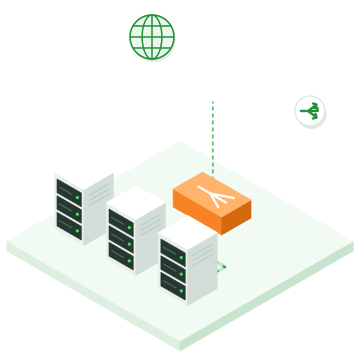
How a load balancer works
The load balancer receives traffic on a single address, often associated with a public IP, then distributes it across the VMs in a pool. It regularly checks that each VM is responding (health check) and stops sending it traffic for as long as it does not respond.
The service is built on relayd, OpenBSD's load balancer. Each load balancer runs in your organization's network space: it only sees your VMs.
Protocols and certificates
The load balancer distributes TCP connections or HTTP and HTTPS requests. It can hold the certificate and decrypt the traffic (TLS termination). This certificate can be your own, or be obtained and renewed automatically from Let's Encrypt.
Your VMs see the visitor's real address through the X-Forwarded-For header (HTTP) or the PROXY protocol (TCP and TLS).
HTTP rules, persistence and failover
HTTP rules filter or route requests based on their path or headers. Session persistence sends the same visitor to the same VM, based on a cookie or a header. A backup pool takes over if all the primary VMs are out of service.
Choosing a size
Four sizes are available depending on the expected traffic, from Small 1 to Advanced 1. Prices range from 3,780.00 to 25,920.00 DZD excl. VAT per month.